Custom Camper Van to Tuktoyaktuk: 16,000 km to the Arctic
How a Nav Camper build allowed Daniele to travel from Montreal to Tuktoyaktuk, fully off-grid, via the legendary Dempster Highway.

Some trips are decided on a whim. And then there are those that live in our minds for years.
For Daniele, reaching Tuktoyaktuk on the shores of the Arctic Ocean belonged to that second category.
Long before the first sketches of her expedition camper van, before even choosing materials or cabinet colours, she was already talking to us about the Dempster Highway. Her goal was not simply to have a beautiful camper van. She wanted a true expedition vehicle, capable of crossing the most remote regions of Canada with complete autonomy, absolute reliability, and all the comfort needed to live for several weeks far from everything.
Because at its core, our work is not only about building vehicles. We build the tools that allow our clients to achieve their greatest dreams.
And Daniele's dream would take them to the very edge of the continent.
The Dempster Highway: The Only Road to the Arctic Ocean in Canada
Few roads can make adventure lovers dream quite like the Dempster Highway.
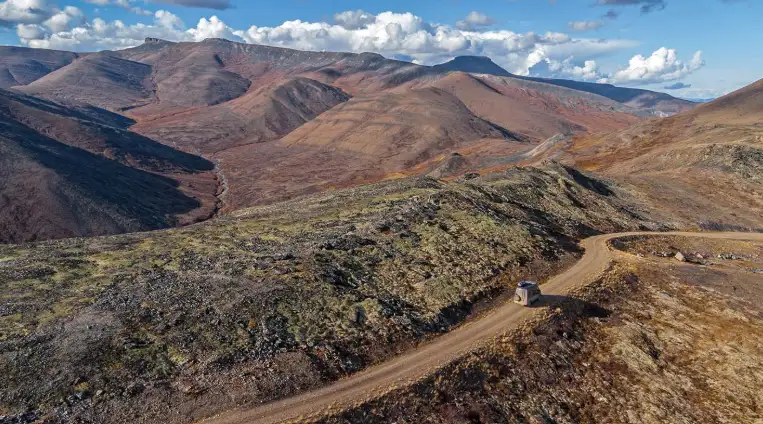
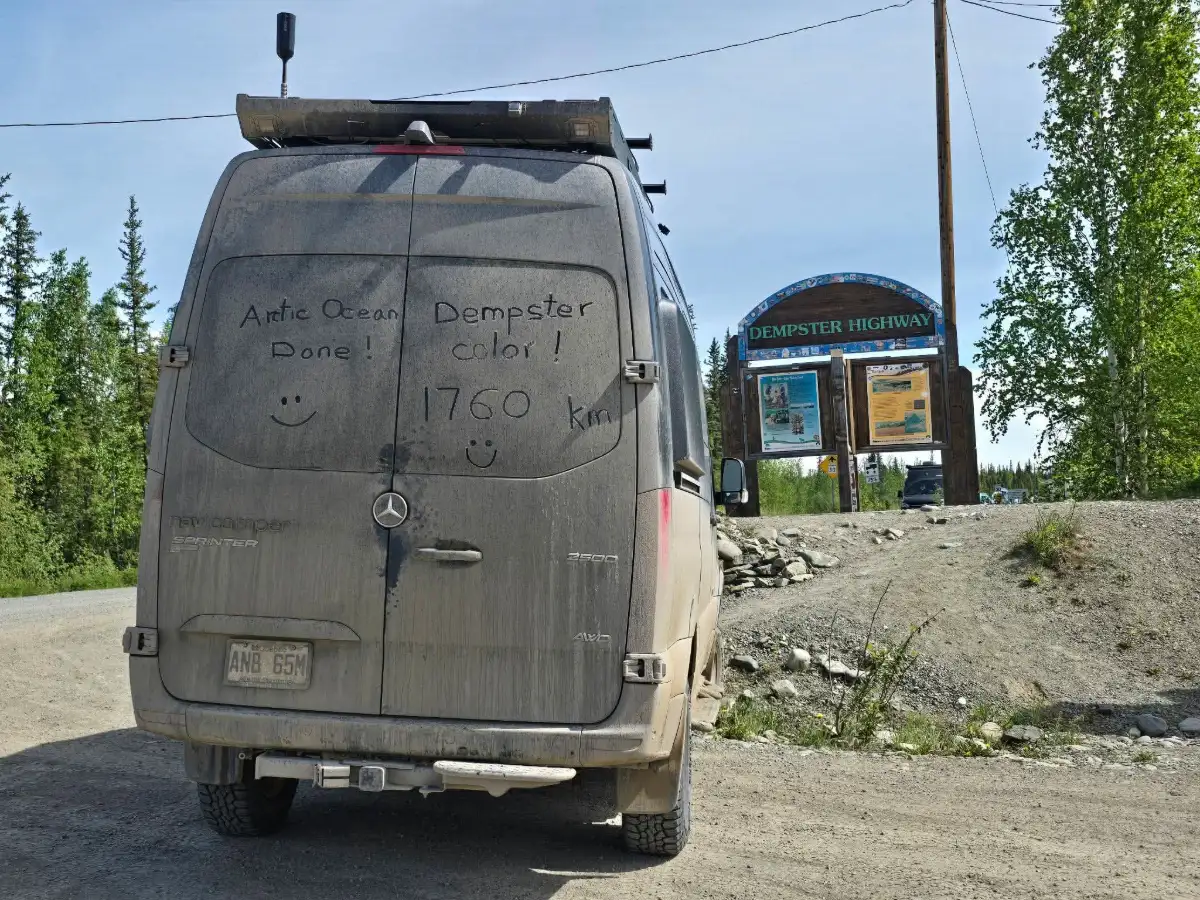
Connecting Dawson City in the Yukon to Inuvik, and then all the way to Tuktoyaktuk on the shores of the Arctic Ocean, it is the only road in Canada that allows travellers to reach the Arctic Ocean year-round. Its roughly 730 kilometres of gravel cross some of the most wild and unspoiled landscapes in North America.
Throughout the journey, the scenery changes constantly. The dramatic mountains of Tombstone Territorial Park, glacial valleys, crystal-clear lakes, vast stretches of tundra, and wild rivers create a backdrop that seems to go on forever. For outdoor enthusiasts, the Dempster is also known for its many hiking trails, where it is possible to walk for hours without crossing paths with anyone.
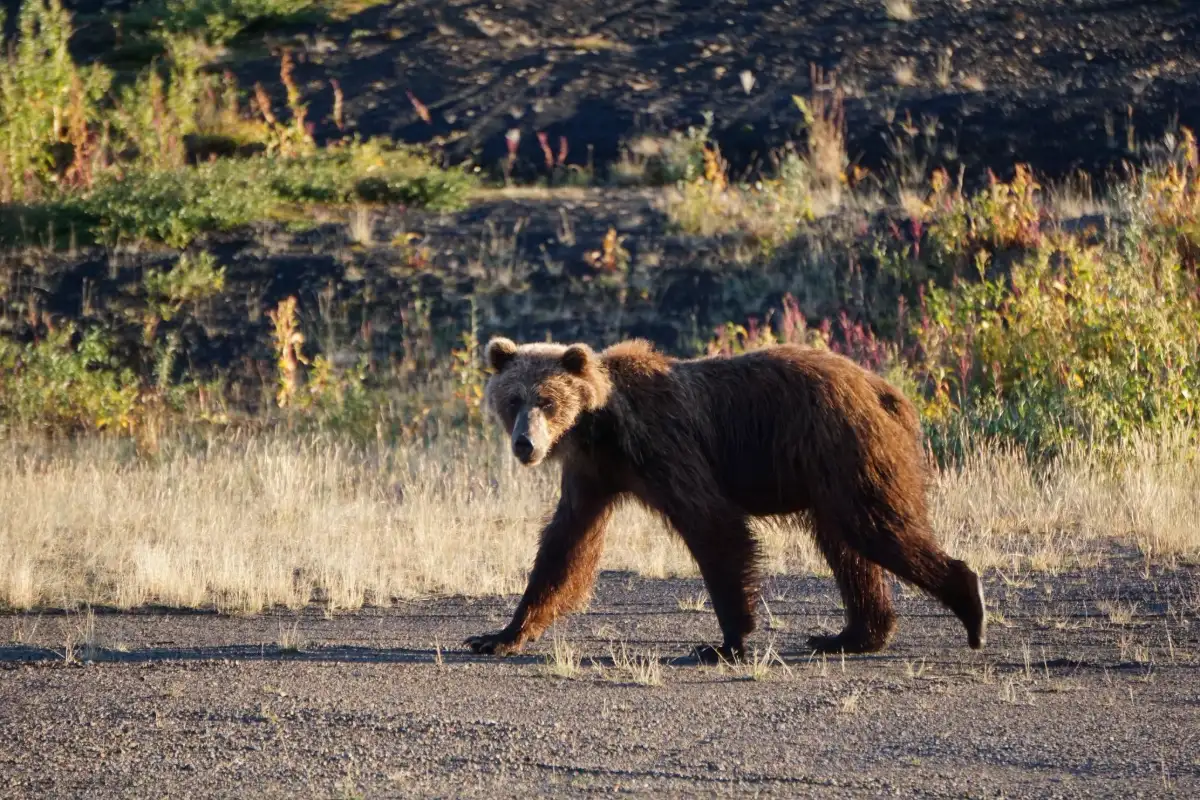
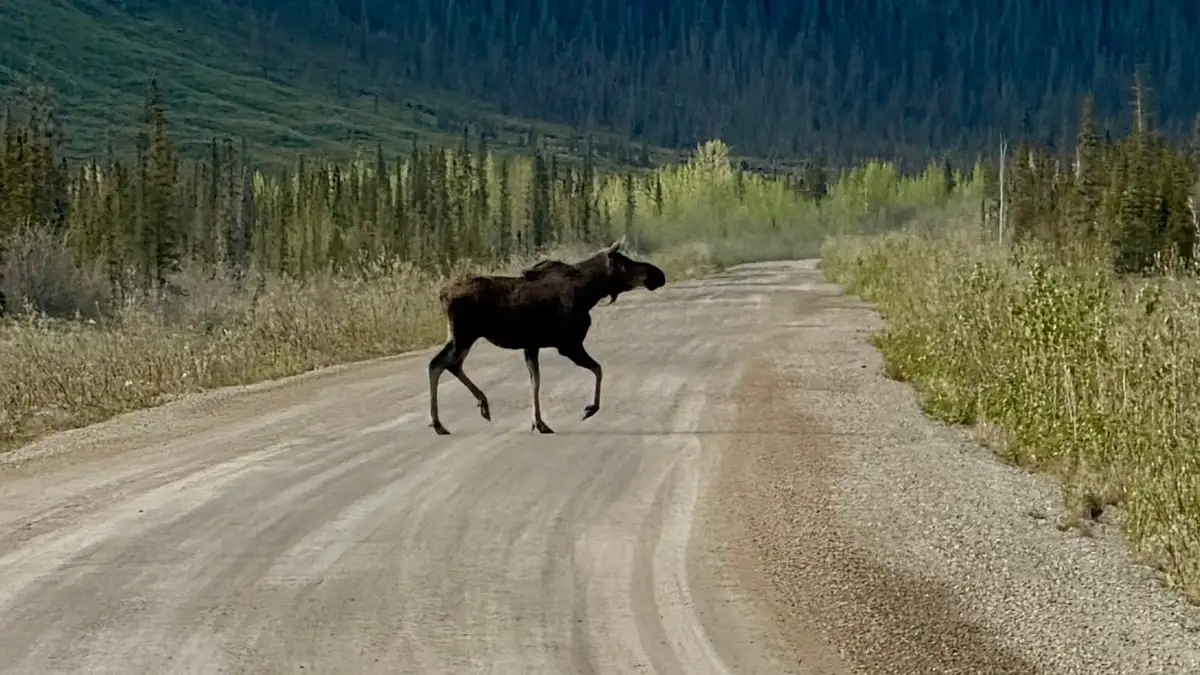
The wildlife is equally impressive. It is not uncommon to spot caribou, moose, grizzly bears, foxes, Dall sheep, or eagles along the roadside, making every day a true expedition in itself.
Preparing a Camper Van Trip to Tuktoyaktuk: What You Need to Know
Reaching Tuktoyaktuk from Montreal is not something you improvise. More than 16,000 kilometres round trip, thousands of kilometres from major centres, gravel road sections, unpredictable weather, and services spread hundreds of kilometres apart all demand careful planning.
Well before departure, Daniele and her partner spent many hours planning their itinerary. Fuel stops, points of interest, hikes, potential campsites, and Dempster Highway conditions were all part of their preparation. On a road this remote, it is always better to anticipate than to improvise.
This preparation also shaped the design of their Mercedes Sprinter 4x4. From our very first meetings, Daniele knew exactly what kind of adventure she wanted to live. Every choice, whether related to energy autonomy, storage, or equipment, had a single goal: to allow them to travel with complete confidence, without the vehicle ever becoming a constraint.
Because on an expedition like this one, the best preparation is the kind you stop thinking about once you hit the road. It simply lets you enjoy the journey fully, kilometre after kilometre.

Autonomy, Durability, Comfort: The Sprinter Build Designed for the Arctic
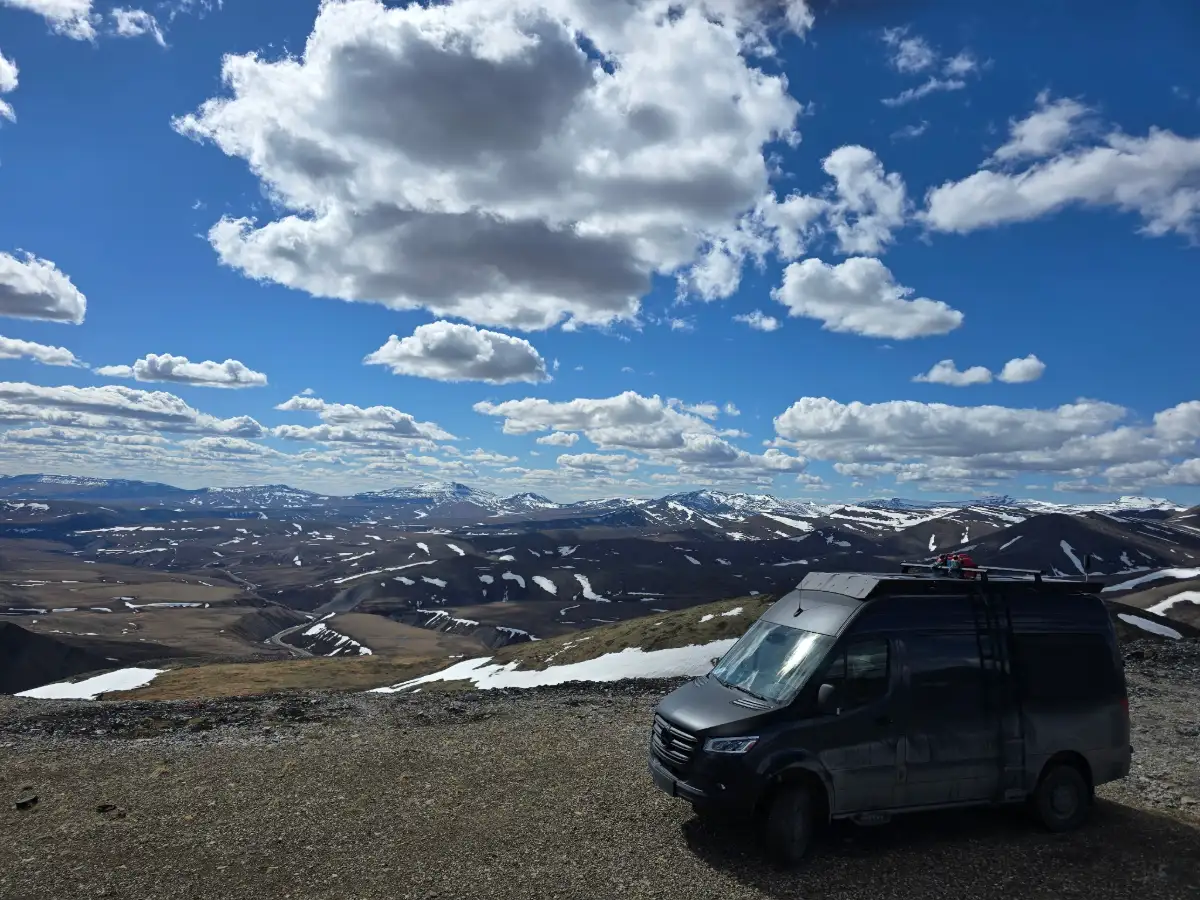
Their Sprinter was designed as a companion capable of crossing the most remote corners of the continent.
Among the equipment that made all the difference:
- Oversized 45-gallon diesel tank, allowing them to cover very long distances between fuel stops.
- 400W of solar panels paired with a 920 Ah lithium battery bank, providing exceptional energy autonomy for several days, or even several weeks depending on conditions, without needing to plug in.
- A Van Compass 4.3 suspension upgrade, providing greater control, stability, and comfort on long gravel sections.
- Two spare tires, a reassuring choice when the nearest garage may be several hundred kilometres away.
- Traction boards and recovery equipment to handle unexpected situations.
- Starlink internet, keeping them connected even in the heart of the Canadian North.
- Large fresh water tank for several days of water autonomy.
- High-capacity refrigerator and freezer to carry several weeks of food.
- Extensive storage spaces designed to hold clothing, outdoor gear, spare parts, and camping equipment.
Every element had been chosen for a specific reason. Not to impress, but to deliver autonomy, reliability, and durability that could handle anything.
What sets Nav Camper apart is the listening that comes before the build.
Before picking up a single tool, our advisors take the time to understand the project behind the project. Not just the desired equipment, but the lifestyle, the travel habits, the situations to avoid, and the experiences to make possible.
For Daniele, that meant designing a vehicle capable of driving 730 kilometres of Arctic gravel with full confidence, staying self-sufficient for several weeks, and remaining comfortable at the end of a long day of expedition travel. Every technical decision followed from that understanding, not from a list of standard features. This custom approach, grounded in each client's real-world use, is what defines our work at Nav Camper.
Tombstone Park, Tundra, and Wildlife: The Landscapes of the Dempster Highway
The further north they travelled, the more the scenery changed.
Boreal forests gradually gave way to vast valleys, steep mountains, and wide stretches of tundra.
One of the most memorable moments of their journey was crossing Tombstone Territorial Park. Its jagged peaks, glacier-carved valleys, and colours that shift throughout the day give the impression of entering an entirely different world. The many hiking trails allow you to immerse yourself completely in this magnificent wilderness, where silence is broken only by the wind and the song of birds.
"We had seen hundreds of photos of Tombstone before leaving, but nothing had prepared us for what we felt once we were there. You feel incredibly small standing in front of those mountains. It is one of the most beautiful places we have ever seen in our lives."
Every stop became an opportunity to lace up the hiking boots, pull out the camera, or simply take the time to admire a landscape that seemed to stretch out endlessly. On the Dempster, you quickly realize that the adventure is not only about reaching Tuktoyaktuk, but about living every kilometre along the way.
Over the course of their journey, they also had the chance to observe exceptional wildlife. Caribou, moose, foxes, eagles, and even several bears crossed their path, serving as a constant reminder that in the Canadian North, nature sets the pace. It is this combination of spectacular scenery, abundant wildlife, and freedom that makes the Dempster Highway one of the great road adventures in North America.
Living Two Months in a Camper Van in the Canadian North
Over the weeks, a completely different rhythm took hold. Days no longer began to the sound of an alarm, but with the first light of dawn. Weather, scenery, and the desire to explore now dictated the schedule, making room for a freedom that few trips can offer.
A coffee facing a lake, a few hours on the road, an impromptu hike, a stop to watch caribou in the distance, or an evening spent in the middle of nature with no neighbours anywhere on the horizon. It is this simple but deeply unfamiliar daily life that gives an expedition like this one its magic.
For Daniele and her partner, their Sprinter quickly became far more than a means of transportation. For more than two months, it was at once their home, their kitchen, their shelter, and their base camp. After a long day on the trails or several hours covering the roads of the North, they returned each evening to a space that was comfortable, warm, and entirely self-sufficient.
"What I loved most was that feeling of being able to stop anywhere and feel completely at home. Every evening we had a new view out the window, but the comfort was always the same."
After Tuktoyaktuk: What Will the Next Expedition Be?
After reaching Tuktoyaktuk, parking their Sprinter on the shores of the Arctic Ocean, and covering more than 16,000 kilometres, one question comes naturally. What will the next expedition be?
Knowing Daniele, it will likely be somewhere even further.
Perhaps the Andes.
Perhaps Patagonia.
After all, the most beautiful journeys are not the ones we finish... but the ones that immediately make us want to set off again.